#LSDUnderground
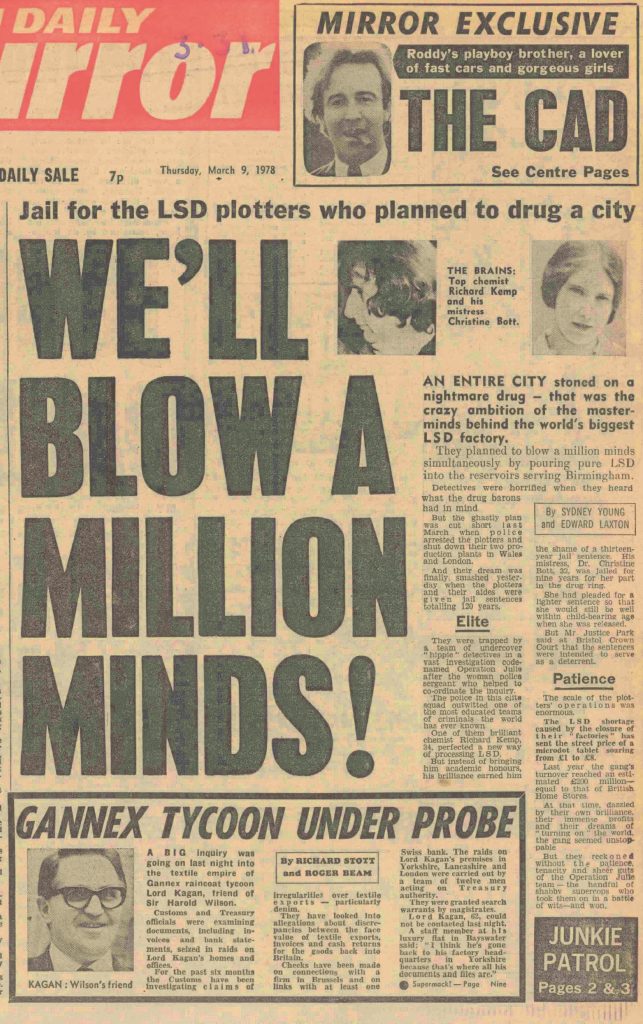
The Daily Mirror, 1978: ‘An entire city stoned on a nightmare drug – that was the crazy ambition of the masterminds behind the world’s biggest LSD factory.’
The ‘masterminds’ were chemist Richard Kemp and his partner Dr Christine Bott – both jailed in the ‘Operation Julie’ trial days earlier. Kemp got 13 years. As for Bott, chemist Andy Munro, later commented, ‘Bott got nine years for making sandwiches. I got ten years for making acid’.
The Mirror continued:
‘Top chemist Richard Kemp and his mistress… planned to blow a million minds simultaneously by pouring pure LSD into the reservoirs serving Birmingham. Detectives were horrified when they heard what the drug barons had in mind.’
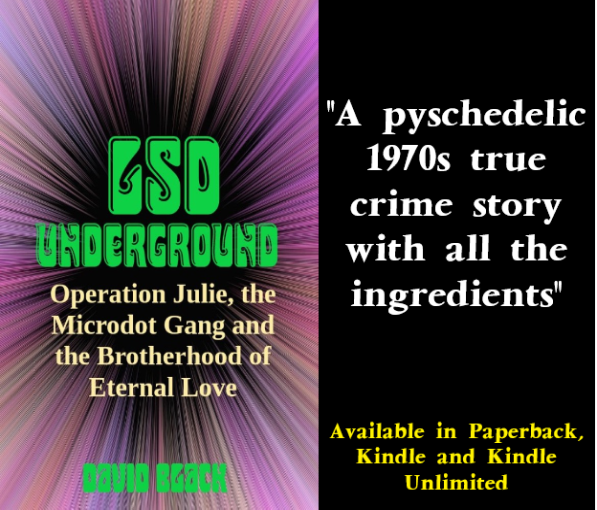
How the ‘acid in the water supply’ nonsense became front page news is one of the things explored in my new book, LSD UNDERGROUND: Operation Julie, the Microdot Gang and the Brotherhood of Eternal Love (available in paperback or ebook at Amazon).
Clue: The story, which was police-sourced, was written by Ed Laxton, the ghost writer for Operation Julie undercover officer Martyn Pritchard’s book, Busted!The Sensational Life-Story of an Undercover Hippie (1978).
The preface to LSD UNDERGROUND can be read on this site HERE
 Iain Sinclair reads extracts from his poem Fifty Catacomb Saints accompanied by Peter Baxter – percussion; Robert Goldsmith – baritone sax; Paul Shearsmith – trumpet, pipes, squeakers, Jew’s harp; Dave Black – electric guitar; Graham Davis – synths; Luke Davis – typewriter; and Out To Lunch – splash’n’klang, piano, mouthnoiseThis session was broadcast live on Resonance FM 104.4, July 12th 2018.